Memory Care in Manchester, NJ: How AristaCare at Manchester Supports Dementia Patients and Their Families
Deciding on memory care for someone you love is never simple. If your family is in the greater Manchester, NJ area and navigating dementia-related challenges, you need clear answers about what memory care actually involves, when it becomes necessary, and where to find specialized support close to home. This guide walks you through everything from recognizing the signs that a loved one needs memory care to understanding costs, choosing the right facility, and making a smooth transition.
Key Takeaways
- Memory care is specialized 24/7 residential support specifically designed for dementia patients, including those with Alzheimer's disease, going well beyond what traditional assisted living provides.
- AristaCare at Manchester in Manchester Township, NJ offers a dedicated Nostalgia Park memory care program within a skilled nursing setting, combining safety features, therapeutic engagement, and comprehensive medical oversight.
- Families should consider a memory care facility when they notice signs like wandering, safety risks at home, caregiver burnout, and increasing behavioral or cognitive challenges.
- While many assisted living communities provide some dementia-related help, memory care facilities deliver higher staff training, enhanced security, and structured therapeutic activities that match the progression of the disease.
- Read through the FAQ and closing sections below for concrete next steps and local contact information for AristaCare at Manchester.
Understanding Memory Care and Dementia-Related Needs
Memory care is a type of long-term residential care focused entirely on people living with dementia, including Alzheimer's disease and other forms of cognitive impairment. Unlike general senior care, memory care focuses on safety, structured routines, and specialized cognitive support rather than heavy medical intervention alone. Memory care facilities provide 24-hour supervision for dementia patients, ensuring that residents are never without trained staff members nearby.
It helps to understand the difference between normal age-related forgetfulness and true cognitive decline. Occasionally misplacing keys or forgetting a name is common with aging. Dementia-related decline looks different: difficulty managing medications, getting lost in familiar places, major personality changes, or an inability to follow simple directions. Over 5 million Americans have Alzheimer's disease, which accounts for roughly 60–80% of all dementia cases. Dementia is a progressive disease that worsens over time, eventually requiring around-the-clock care for many older adults.
Memory care services address far more than memory loss. Here are the core needs these residential facilities cover:
- Safety: Eliminating hazards like wandering, falls, and kitchen accidents
- Routine and structure: Consistent daily schedules for meals, hygiene, rest, and activities
- Social engagement: Group programs, one-on-one interaction, and purpose-driven activities
- Medical oversight: Medication management, chronic disease monitoring, and coordination with a trusted doctor
- Behavioral and emotional support: Strategies for agitation, sundowning, anxiety, and communication difficulties
- Personal care tasks: Hands-on help with bathing, dressing, toileting, eating, and continence
Who Needs Memory Care vs. Assisted Living?
Assisted living communities serve people who need help with daily tasks like bathing, dressing, and meals but still retain significant independence. Assisted living facilities generally don't provide the secure environment, dementia specific training, or structured therapeutic programming that memory care delivers. Many assisted living communities can handle the early stages of memory problems, but as a loved one's dementia progresses, the gap between what assisted living offers and what your family member actually needs grows quickly.
Memory care is appropriate when home care becomes unsafe or when assisted living can no longer manage escalating behaviors and safety concerns. Signs for memory care include wandering or uncontrolled incontinence, but the list goes further. A doctor can help determine the need for memory care, and families should watch for the following indicators.
Common signs it's time to consider memory care:
- Frequent wandering, especially at night
- Leaving the stove, oven, or water running repeatedly
- Aggression, agitation, or sudden personality changes
- Hallucinations or delusions
- Inability to manage daily living activities (dressing, eating, hygiene)
- Repeated falls or injuries at home
- Caregiver exhaustion or burnout
For many families in the Manchester, NJ area, the tipping point comes from real-life situations: a caregiver working full-time in nearby Whiting or Toms River whose parent begins nighttime wandering in a multi-story home, or repeated hospital visits because home care can no longer manage both chronic health issues and cognitive decline. These are moments when a memory care facility becomes the safer, more supportive option.
How Memory Care Differs from Assisted Living and Skilled Nursing
Understanding the differences between care levels helps families make the right call:
- Assisted living focuses on help with daily tasks-meals, medication reminders, light housekeeping-but typically lacks the secured entries, high supervision, and dementia care programming that memory care requires. Many assisted living communities are well-suited for independent living with moderate support, not for managing complex cognitive challenges.
- Memory care facilities add specialized dementia-related programming, a secure environment with alarmed doors, and higher staff-to-resident ratios. Memory care facilities typically maintain higher staff-to-resident ratios than assisted living to ensure constant, attentive support.
- Skilled nursing facilities with memory care provide 24/7 medical and nursing oversight alongside dementia programming. AristaCare at Manchester combines post-acute clinical capabilities-wound care, pulmonary care, AHA-certified cardiac telemetry-with its Nostalgia Park memory care program. This means dementia patients who also face serious medical needs receive specialized care under one roof.
Which setting fits which stage?
- Mild dementia: Assisted living may still work when someone manages most daily tasks and doesn't wander or face major safety risks.
- Moderate dementia: Memory care becomes vital as confusion, behavioral issues, and inability to handle personal care tasks escalate.
- Advanced dementia: Skilled nursing memory care-like the model at AristaCare at Manchester-is often necessary for residents with profound dependency, swallowing difficulty, infection risk, or the need for hospice-level medical care.
In Manchester Township and greater Ocean County, families often move a loved one from home care or assisted living into a memory care unit when medical needs and behavioral changes converge.
Inside a Memory Care Facility: Daily Life and Environment
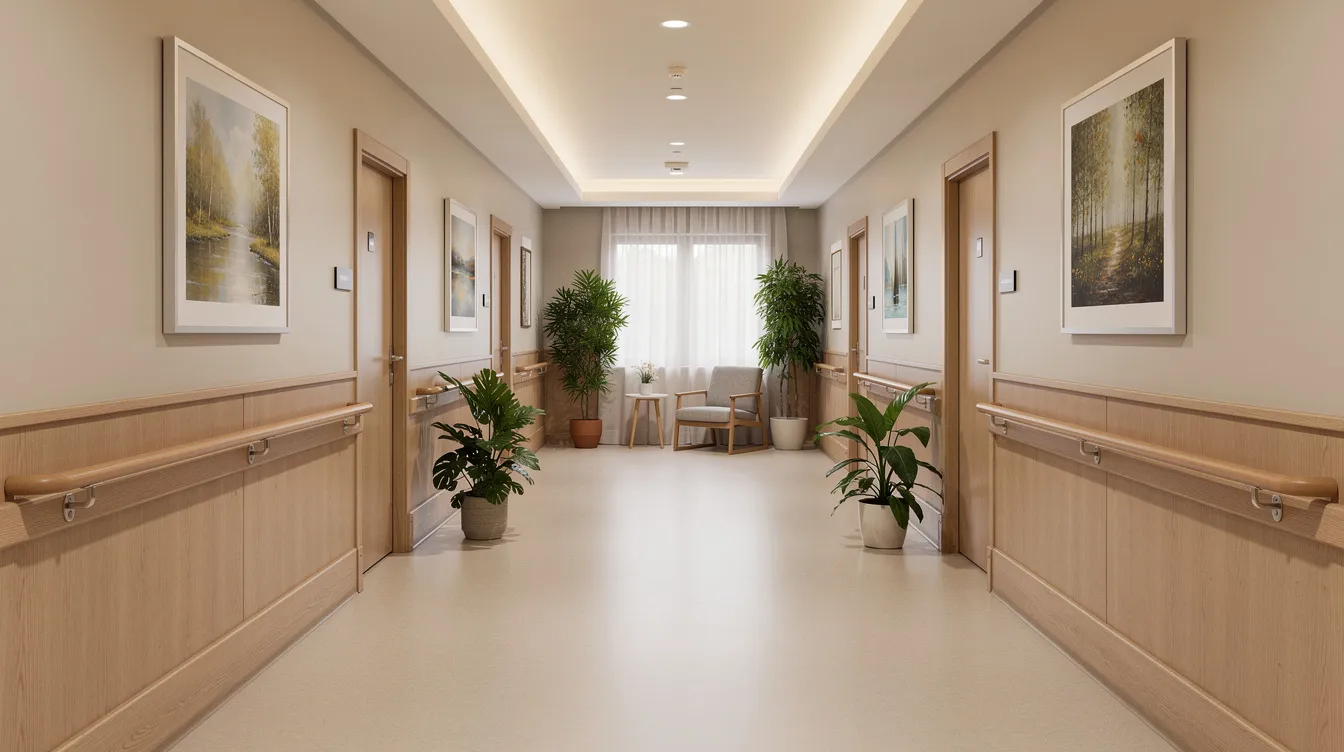
Memory care environments are designed to minimize confusion through visual cues and simplified layouts. That means clear signage, color-coded hallways, calming décor, and intentional floor plans that reduce disorientation. About 88% of memory care facilities are secure environments, and memory care facilities often have 24-hour security staff to ensure residents remain safe without feeling confined.
A typical day for a resident follows a structured environment: breakfast in a communal dining area, a small-group activity like music or reminiscence therapy, individualized personal care routines, a rest period, lunch, afternoon engagement, dinner, and an evening wind-down designed to address sundowning. One resident might enjoy a guided walk through a secured garden after breakfast, while another joins a small-group reminiscence program where staff use old photographs and favorite songs to spark conversation and connection.
About 41% of memory care communities feature a wandering management system, and families touring facilities in New Jersey should look for these safety features:
- Fully enclosed, inviting outdoor spaces
- Motion sensors or monitoring technology
- Handrails in hallways and bathrooms
- Low-glare, consistent lighting
- Alarmed doors at all exit points
- Staff alert systems and proximity to emergency resources
Many assisted living communities lack this level of environmental safety, which is why a dedicated memory care facility is specifically designed for residents whose cognitive decline demands it.
Therapeutic Activities and Specialized Memory Care Services

Memory care facilities offer specialized activities for cognitive stimulation that go far beyond keeping residents occupied. Structured daily activities in memory care help reduce stress and disorientation in residents, and every program is scheduled with intention.
Memory care program activities focus on cognitive stimulation like music therapy and reminiscence therapy. Music and singing are therapeutic activities in memory care that often unlock emotional responses even in residents with advanced memory loss. Reminiscence therapy helps recall joyful childhood memories, while art therapy and craft projects give residents creative outlets. Cognitive games are common activities in memory care facilities, and exercise sessions-including chair yoga, gentle walks, and balance work-are included in memory care activities. Memory care facilities also offer gardening and pet therapy, both of which provide sensory stimulation and social engagement.
Care plans are individualized: a former teacher might enjoy reading aloud, while a veteran may respond to patriotic songs during a group session. Activities adapt as dementia progresses, always matching the resident's cognitive level, mobility, and personal history.
Memory care staff receive specialized training in dementia care, including validation therapy, redirection techniques, and calming interventions. About 79% of memory care communities provide specialized staff training, and New Jersey law requires that any facility advertising dementia care train all direct care staff in dementia-specific methods. Physical therapists, occupational therapists, and speech therapists work alongside memory care teams to support mobility, swallowing, and communication-services that complement cognitive and social programming, supported by advanced real-time monitoring and telemedicine technology.
AristaCare at Manchester's Nostalgia Park Memory Care Program
AristaCare at Manchester is a Medicare- and Medicaid-certified skilled nursing and long-term care facility in Manchester Township, NJ, with a dedicated Memory Care at Nostalgia Park program and a broader focus on high-quality inpatient rehabilitation and long-term care. The Nostalgia Park program is built around a simple but powerful idea: understanding each resident's life before dementia, and using that knowledge to create intellectually stimulating and emotionally fulfilling engagement.
Key elements of the program include:
- Themed memory stations that draw on familiar settings and experiences from residents' pasts
- Structured daily calendars balancing group activities, quiet time, and one-on-one visits
- Life-story work where staff learn about a resident's interests, career, and family history to personalize daily interactions
- Small-group activities designed for different stages of cognitive decline
Because AristaCare at Manchester operates within a skilled nursing facility, dementia patients who also need sub-acute rehabilitation, wound care, pulmonary support, specialized ventilator and respiratory care, or cardiac telemetry can receive both high-level medical care and Alzheimer's care in the same building. On-site amenities include a therapy gym, therapy pool, and a brand-new sub-acute unit with private room and semi private room options. Families can preview these spaces and see the AristaCare difference in photos. These spaces are used to keep residents active and engaged safely, whether through guided aqua therapy sessions or supervised strength-building exercises.
Family Involvement and Support
Family involvement is central to effective memory care. From the initial assessment through ongoing care plan reviews and everyday visits, family members remain part of the care team. AristaCare at Manchester involves families in goal setting, shares regular updates, and welcomes participation in activities-helping maintain the emotional connection between residents and the people who love them, consistent with its Quality Experience program focused on communication and responsiveness.
Staff members can also provide education and emotional support to family caregivers, explaining disease progression, suggesting communication strategies, and helping families cope with grief and role changes. This kind of specialized support matters, especially during the different stages of a loved one's dementia.
Families from Manchester, Whiting, Toms River, Lakehurst, and surrounding Ocean County communities are encouraged to visit often, bring familiar items from home, and stay actively involved. Memory care is a partnership, not a replacement for family love-and that partnership produces better outcomes for residents and their loved ones alike.
Costs, Coverage, and Planning for Memory Care
Memory care communities tend to cost more than standard assisted living because of higher staffing levels and specialized programming. The average monthly cost of standalone memory care was $6,935 in 2021, while the average monthly cost of memory care reached $8,399 in 2023. The national median cost of memory care is $6,999 per month, though New Jersey costs tend to run higher-often between $6,720 and $10,000 monthly. Annual costs for memory care can reach $116,800 for a private room depending on location and level of care. Most families pay for memory care out of their own pockets, though several coverage options exist.
Here's what to know about coverage:
- Medicare may cover skilled nursing, post-hospital rehab, and therapies, but generally does not pay for long-term custodial care or room and board in a memory care facility. Medicare advantage plans may offer some additional benefits worth exploring.
- Medicaid in New Jersey may cover certain memory care costs through its long-term care programs, depending on financial and medical eligibility.
- Veterans benefits may provide supplemental support for qualifying individuals and families.
AristaCare at Manchester accepts Medicare and Medicaid and can help families understand which costs may be covered. Families should speak with an elder law attorney, financial planner, or social worker to explore long-term care insurance and New Jersey Medicaid eligibility. Gather diagnosis records, functional assessments, income and asset information, and any private insurance policies before contacting the admissions team.
How to Choose a Memory Care Facility in Greater Manchester, NJ
Finding the right facility for a loved one takes research and firsthand visits. Here's a step-by-step approach for families in Manchester Township and nearby communities like Whiting, Jackson, Toms River, and Lakewood:
- Research options online. Look for memory care communities in the seniors housing market that are Medicare/Medicaid certified and offer dementia care programming. The Alzheimer's Association and the National Investment Center for Seniors Housing & Care are helpful resources for understanding industry benchmarks.
- Schedule tours. Visit at different times of day. Observe whether residents appear engaged, calm, and well cared for. Pay attention to staff interactions.
- Ask targeted questions. Inquire about dementia specific training hours, staff-to-resident ratios, secured outdoor access, approaches to challenging behaviors, and how family involvement is encouraged.
- Evaluate medical capabilities. For dementia patients with multiple chronic conditions or other health issues, ask whether the facility can provide physical therapy, occupational therapy, respiratory care, or cardiac monitoring. This is where AristaCare at Manchester's full clinical spectrum stands out as a local advantage-many facilities in Ocean County cannot match its combination of memory care and skilled nursing under one roof.
- Create a comparison checklist. Go beyond amenities. Consider culture, communication style, and whether the facility can adapt as your loved one's needs change over time. Expert advice from an assistant professor of geriatrics or a geriatrician can also guide your evaluation.
When and How to Transition a Loved One into Memory Care
Recognizing the tipping point is one of the toughest parts of dementia care. A tough decision often follows repeated safety incidents, caregiver exhaustion, or direct advice from a geriatrician or neurologist. If your family is spending more time managing crises than providing comfort, it may be time.
When talking with a loved one about the move, use calm, simple language. Focus on safety and support rather than loss. Involve them in small choices-like picking a favorite blanket to bring-when possible.
Practical transition steps:
- Tour the memory care facility together if your loved one is able
- Bring familiar furniture, photos, and personal objects to reduce confusion
- Maintain a consistent visitation routine in the first weeks
- Communicate openly with staff about your loved one's preferences, routines, and triggers
AristaCare at Manchester's team can assist with the transition from hospital, home, or another assisted living community, coordinating with discharge planners and arranging needed therapies on arrival through its rehabilitation services. The transition is an ongoing process, not a single event-staff and family work together to monitor adjustment and refine care plans over time.

Frequently Asked Questions About Memory Care
Is memory care the same as a nursing home?
Not exactly. A nursing home is a broad term for skilled nursing facilities providing 24/7 medical care for a range of conditions. Memory care is a specialized program or memory care unit focused specifically on dementia-related needs. Some nursing homes, including AristaCare at Manchester, operate dedicated memory care programs within a larger skilled nursing facility. Stand-alone memory care communities may offer less intensive medical services but still provide 24-hour supervision and dementia-focused support in a safe environment.
Can someone receive rehabilitation and memory care at the same time?
Yes. Many dementia patients need both post-hospital rehabilitation-physical, occupational, or speech therapy-and memory care support. At AristaCare at Manchester, residents can participate in rehab programs using the therapy gym and therapy pool while living in a structured environment tailored to their cognitive challenges. This integrated model reduces the stress of moving between settings and supports a safer, more coordinated recovery for older adults facing both medical needs and memory issues.
How involved can I be in my loved one's care after they move in?
Families are encouraged to remain very involved. Visiting regularly, joining care plan meetings, and participating in specialized activities when appropriate all improve memory care outcomes. AristaCare at Manchester communicates with families through scheduled updates, phone calls, and care conferences. Staying engaged can improve emotional well-being for both the resident and their family members.
What if my loved one's dementia gets worse over time?
Dementia is progressive, and memory care facilities are designed to adapt. Care plans at AristaCare at Manchester are regularly reviewed and adjusted-potentially adding more assistance with daily tasks, increased supervision, or additional therapies. Having skilled nursing and specialty programs on-site means residents can often remain in the same community even as medical and cognitive needs increase, avoiding disruptive transfers.
How do I start the admissions process with AristaCare at Manchester?
Start by calling the admissions office or visiting the Contact Us page. Request a tour of the Nostalgia Park memory care program and share your loved one's medical history and current care needs. Staff can help families in the greater Manchester, NJ area understand insurance coverage, Medicare and Medicaid options, and required paperwork for both short-term rehab and long-term memory care. Bring any recent hospital or physician documentation to streamline evaluation and planning.
Your Family Deserves Peace of Mind-Explore Memory Care at AristaCare at Manchester
If you're a family in Manchester Township, Whiting, Toms River, Lakehurst, or anywhere in Ocean County searching for the right memory care facility, AristaCare at Manchester offers what most facilities can't: a full continuum of care-post-acute rehabilitation, long-term care, and the Nostalgia Park memory care program-all in one trusted location. Your loved one can receive both medical care and specialized dementia support without ever needing to transfer.
Schedule a personalized tour, meet the memory care team, and see resident rooms, secured common areas, and therapy spaces for yourself. Contact AristaCare at Manchester by phone or through the website to discuss your loved one's situation, review clinical needs, and explore whether short-term rehab, long-term memory care, or a combination is the best fit.
Seeking memory care is an act of love. The right facility doesn't replace your family-it gives your loved one the chance to live more safely, comfortably, and meaningfully, even in the face of dementia-related challenges.